What to bring to a well-baby visit or vaccination appointment
Published 1 October 2026 · Dao Van Thuong · 4 min read
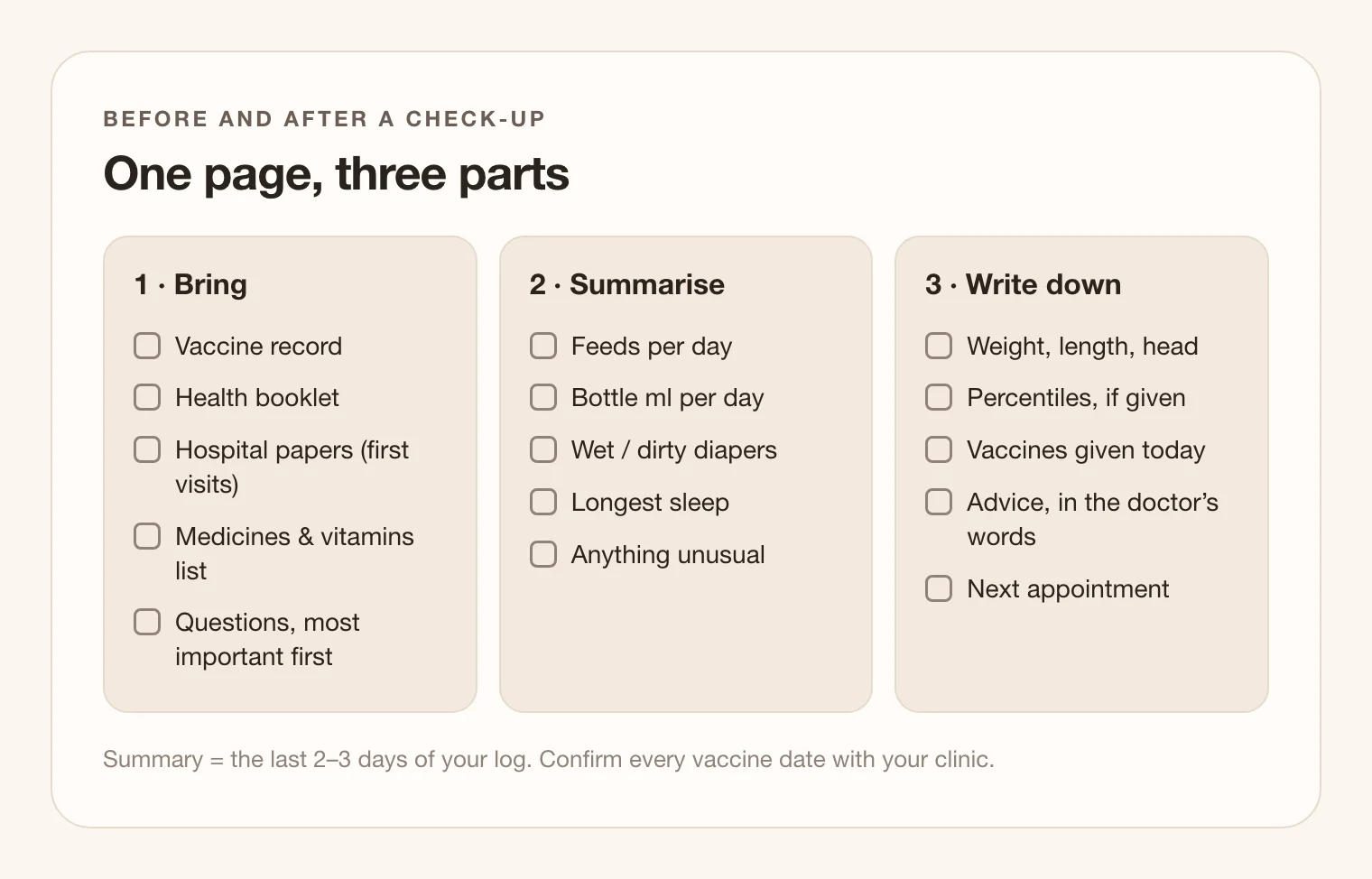
Before each check-up, get four things ready: your baby's records (vaccine record, health booklet, hospital discharge papers), a short summary of feeds, sleep and diapers over the last few days, a list of any medicines or vitamins, and your questions written down. Afterwards, write down the measurements and the doctor's advice the same day.
Ten minutes of preparation makes a short appointment complete, and you leave without the “I forgot to ask” feeling.
This guide is general information, not medical advice. Follow what your doctor, midwife or health visitor told you, and call emergency services in an emergency.
Why prepare at all?
Time with the doctor is often a few minutes, spent while your baby cries and you wrestle with a diaper. The American Academy of Pediatrics (AAP) suggests bringing the hospital paperwork and notes on feeding and diapers, because those are the things the doctor nearly always asks about.
The usual questions: how often does the baby feed and for how long or how much, how many wet and dirty diapers a day, how is sleep going, is the baby taking any medicines or vitamins, and is anything worrying you. Answering from notes is far more accurate than answering from memory.
What should I bring?
- The vaccination record and any child health booklet you were given (in Vietnam, the Mother and Child Health Handbook issued under the Ministry of Health).
- For the first visits, the hospital discharge papers: birth weight, discharge weight and newborn screening results.
- A summary of the last 2–3 days: number of feeds (or total bottle ml), wet and dirty diapers, and the longest stretch of sleep.
- A list of medicines, vitamins or probiotics the baby takes, with the exact name on the box, and anything the breastfeeding parent takes.
- Your questions, written down, most important first.
- The diaper bag: diapers, wipes, a spare outfit, and a feed or bottle if your baby takes one.
Which questions are worth writing down?
Write down whatever is actually on your mind; there is no template. If you are not sure where to start, these are common ones:
- Is the baby feeding enough and growing as expected? Which percentile are they on the growth chart?
- Is this sleep pattern okay, and is the sleep space safe?
- Which vaccines are next, when, and what should we watch for afterwards?
- What do babies usually do at this age, and how can we play with ours?
- When should we call the clinic, and when should we go to the emergency department?
Bring the milestone checklist if you keep one, and a short video of anything that worries you — a breathing sound, a movement — because babies rarely repeat it in front of the doctor.
What should I write down during the visit?
- 1Measurements: weight, length and head circumference, with the date. If the doctor mentions a percentile, note it too.
- 2Vaccines given today: the vaccine name, the date and the clinic. Ask the staff to fill in the record before you leave.
- 3Advice: any change to feeding, sleep, medicines or vitamins, written as the doctor said it rather than in your own summary.
- 4The next appointment, and anything that should make you call sooner.
If both parents go, one holds the baby and the other takes notes. Take a photo of the record once the staff have filled it in.
What should I do after the visit?
- Copy the measurements and vaccines into your baby's log the same day, while you still remember them clearly.
- Set reminders for the next appointment or vaccination, the day before and that morning.
- Tell your partner or the baby's carer about any change the doctor suggested, so everyone does the same thing.
- Watch your baby in the hours after vaccinations as the clinic told you, and call the doctor if anything worries you.
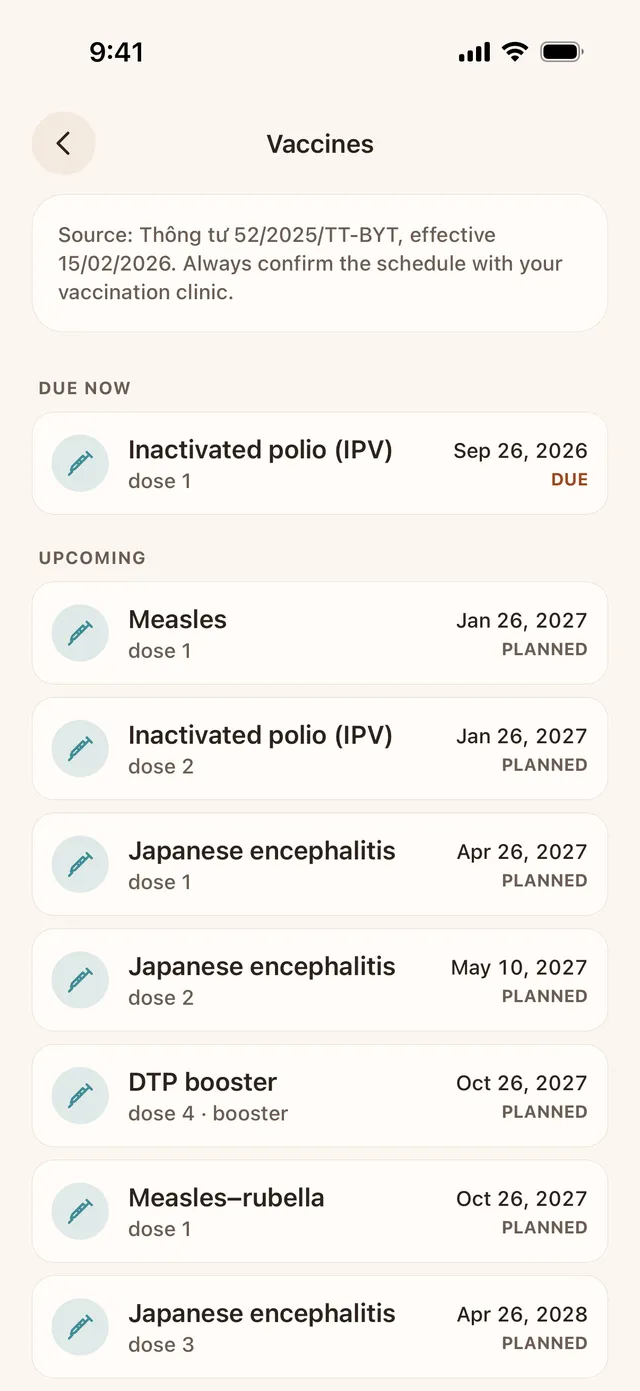
Vaccine schedules are national: in Vietnam the Expanded Programme on Immunization is set by the Ministry of Health (Bộ Y tế), in the US the CDC publishes one, and other countries have their own. Always confirm the schedule with your baby's clinic.
Where Baton helps
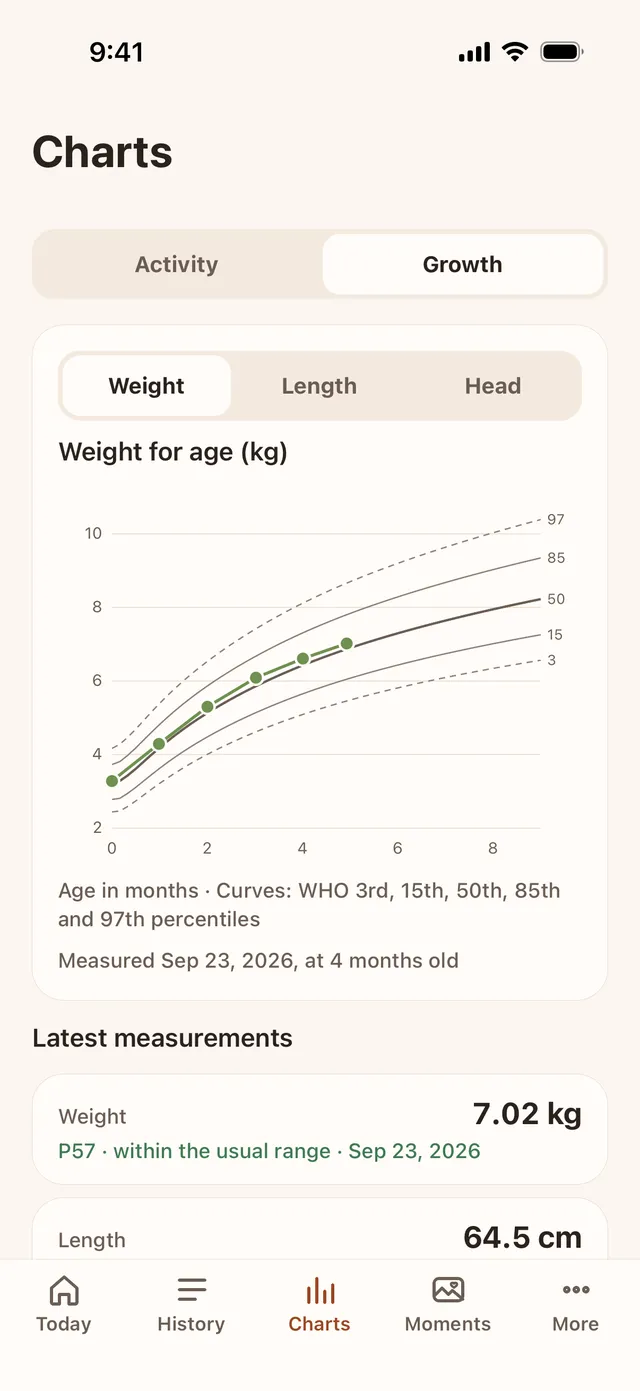
Baton keeps the answers the doctor asks for. Today's timeline and the 7-day charts show feeds, bottle amounts, sleep and diapers, and the whole history exports to CSV for free. Every growth measurement shows its percentile on the WHO growth standards (the latest one is free; the full chart history is Baton Plus).
For a baby in Vietnam, Baton builds the national schedule from the birth date under Circular 52/2025/TT-BYT and reminds you the evening before and the morning of each dose; anywhere else you add a custom vaccine with your clinic's dates. The health log records medicines, temperatures and symptoms exactly as you enter them. With Baton Plus you pick a date range and get a PDF for the pediatrician: daily totals, a feeding and sleep summary, diapers, growth entries and the vaccines given. Baton does not replace your doctor, and it is coming soon to the App Store.