Diaper rash: how to keep a simple log and when to see a doctor
Published 10 November 2026 · Đào Văn Thương · 4 min read
“My baby has a red, sore bottom: how long is it normal, and when should I call someone?” is one of the most common worries of the first months. The NHS describes nappy rash (the UK word for diaper rash) as common and usually treatable at home, with some clear signs that mean it is time to see a doctor or health visitor.
This guide does not tell you how to treat a rash or which cream to use. It covers what is worth writing down so that the person who looks at it, your pediatrician, health visitor or pharmacist, gets facts rather than guesses, and how to keep that record on paper or in Baton: Baby Tracker. It is general information, not medical advice.
This guide is general information, not medical advice. Follow what your doctor, midwife or health visitor told you, and call emergency services in an emergency.
What does the NHS say about diaper rash?
The NHS page on nappy rash lists red or raw patches, spots, and a sore or uncomfortable bottom as the usual picture, and describes home care built around gentle cleaning and a nappy rash cream at each change. Read the current page itself for the details and wording, because advice is updated.
The same page says to see a GP or health visitor if the rash does not clear up, gets worse, or does not improve with home care, if it bleeds, or if there are red spots in the skin folds, which can mean thrush. It says to get advice urgently if your baby seems unwell, for example with a fever or by feeding less. For anything that worries you, ask your pediatrician, health visitor or pharmacist.
Why keep a log of a rash?
A rash changes from day to day, and by the time of the appointment it often looks different from how it looked three days ago. A short log answers the questions you will be asked: when did it start, is it getting better or worse, and has anything changed around then, such as a new food, a new brand of wipes, a different diaper size, a bout of loose stools or a course of medicine?
It also helps two caregivers stay consistent. If one parent applied a cream before leaving for work, the other should know it was done.
What is worth writing down?
One line a day, or one line each time something changes, is plenty:
- The date it started and where it is: the bottom, the folds, the genital area, the thighs.
- What it looks like in plain words: red, raw, spots, blisters, dry or scaly, bleeding. A photo taken near a window with the date is often more useful than any description.
- Is it better, the same or worse than yesterday.
- What you did: how often you changed diapers, and any cream or product you used, copied from the label. Ask your pharmacist before using something new.
- Anything that changed around the start: a new food, new wipes or diapers, loose or frequent dirty diapers, a medicine.
- How your baby is: comfortable or fussy at changes, feeding as usual, any temperature you measured and how.
Our guide to diaper changes explains how to see your baby's usual pattern, which makes a change easier to spot.
How do I keep a diaper-rash log in Baton?
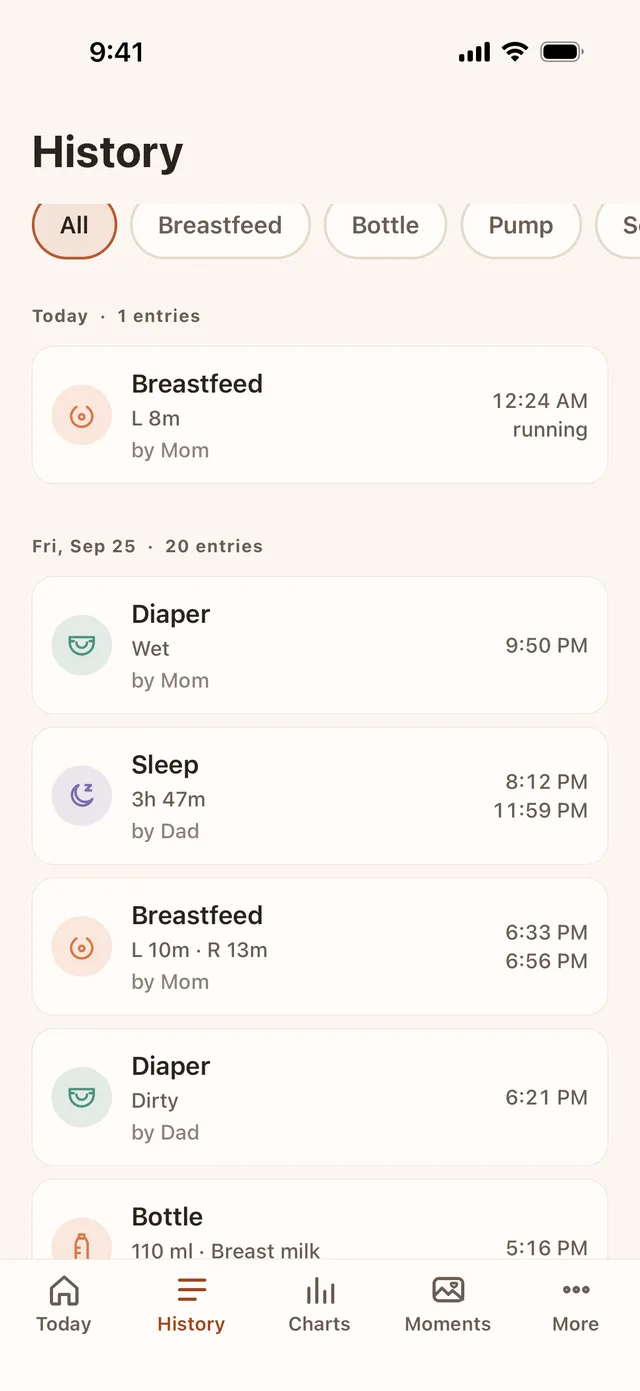
Baton has no rash tracker, no cream button and no rash photos in the diaper entry, and it does not assess a rash. What it does have is a diaper entry (wet, dirty or both, with an editable time) and a Note: tap Note on the Today screen, write a line such as “rash on the bottom, a bit redder than yesterday, changed to a new brand of wipes on Monday”, and save. Every entry shows who logged it, so your partner's notes join yours.
In History, notes sit in time order among your feeds, sleeps and diapers, so you can see how the rash lined up with loose diapers or a feed change. For a photo, take it with your phone camera and keep it in your own Photos album with the date; write “photo taken” in the note so you know it exists. For the appointment, show the History screen or send the free CSV, which has a note column.
When should I call someone?
Follow the NHS list above: see a GP or health visitor if the rash is getting worse, is not improving, is bleeding, or has red spots in the skin folds. Get advice urgently if your baby seems unwell, has a fever or is feeding less. If you are unsure, call your pediatrician, health visitor or local advice line, and bring your notes.
If your baby has trouble breathing, is hard to wake or you think it is an emergency, call your emergency number straight away.
Frequently asked questions
- How long does diaper rash last?
- It varies, so this guide does not promise a number. The NHS says to see a GP or health visitor if a rash does not clear up or is not improving with home care. A dated log shows whether it is getting better.
- When should I see a doctor about nappy rash?
- The NHS lists a rash that gets worse or does not improve with home care, bleeding, and red spots in the skin folds (possibly thrush). Seek advice urgently if your baby seems unwell, has a fever or feeds less.
- Does Baton have a diaper-rash tracker?
- No. Baton has no rash tracker or cream button and gives no assessment. You can log diapers, add a Note, read both in History, and export them in the free CSV.
- Can I attach a rash photo in Baton?
- Not to a diaper entry or a Note. Keep the photo in your phone's own Photos album with the date and mention it in a Note.